
How visuals spur memory faster than text
May 19, 2026
- memory
- science-of-reading
- product
- reading-experience
How visuals spur memory faster than text
There is a finding in cognitive psychology called the picture superiority effect. It has been replicated so many times across so many populations that it is about as close to a settled result as the field produces: people remember pictures better than words. Not a little better. Substantially better. In a typical experiment, subjects recall roughly 65% of images seen days earlier; the same subjects recall only about 10–15% of words read in the same session.
The reason is not that images are inherently richer than words. The reason is that the brain encodes images in two ways simultaneously — visually and semantically — while it encodes most printed words only semantically. The dual channel gives images twice as many hooks into memory. This is Allan Paivio's dual coding theory, developed in the 1970s and still the best account of why pictures stick.
The test case: a book about scent
Perfume is an unusually instructive example. Patrick Süskind's novel is almost entirely written through olfactory description — Jean-Baptiste Grenouille's genius is scent, and the prose tracks it obsessively. The tanning pits, the perfumer's laboratory, the orange-blossom warmth of Laure Richis — the book conjures them through smell.
But your brain cannot encode smell while reading. It can't store "the odor of the fish market on the Rue aux Fers" as an olfactory memory triggered by prose. It translates that into something it can hold: a fragment of visual impression, a partial scene, an emotional tone. This is already a translation, and translations are lossy.
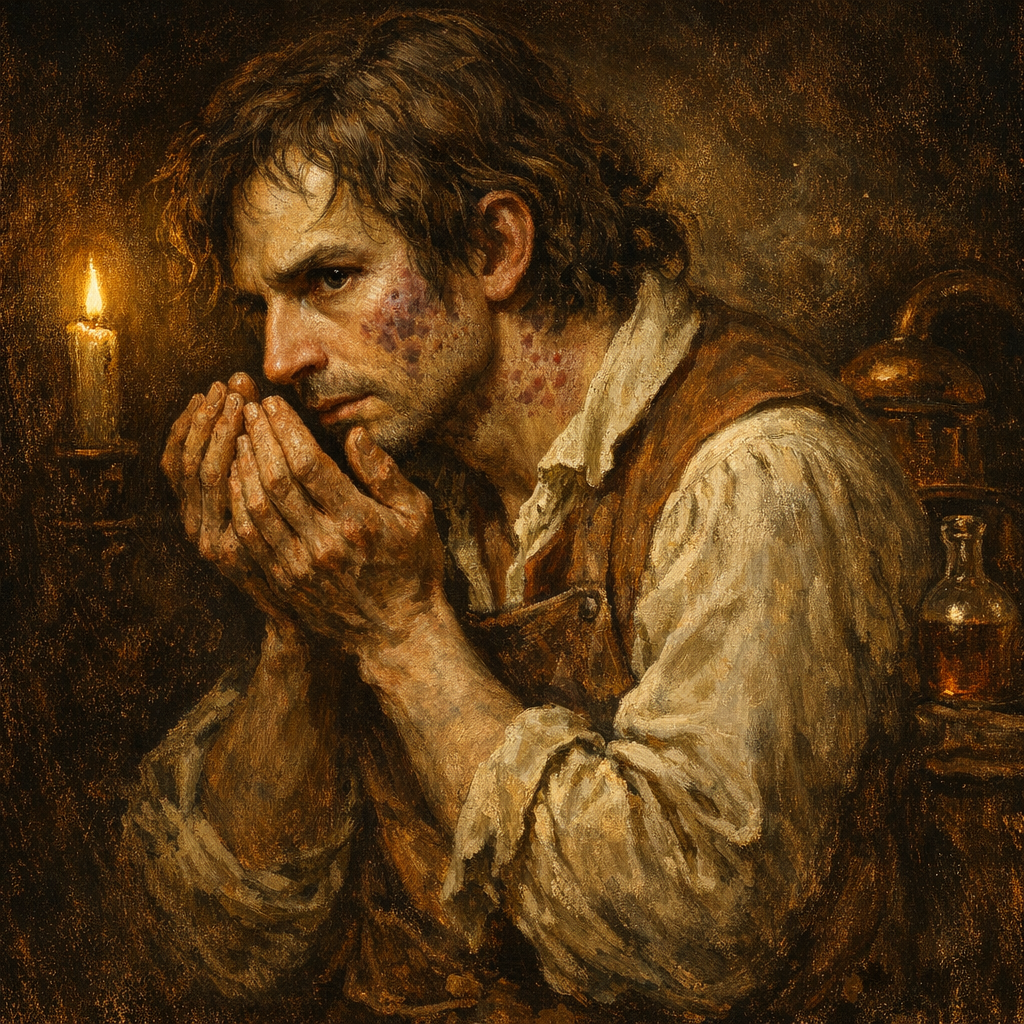
What a character portrait gives back is a visual anchor for the semantic content. When you read Grenouille's name in chapter fourteen — after three weeks and a hectic week in between — the portrait brings his presence back. Not the smell, which the book wants you to imagine and can't directly give you, but the figure: the particular economy of his movements, the intensity behind the unremarkable face, the Paris streets that produced him.
What this means for a full cast
Perfume moves through a series of figures who matter to Grenouille's arc: Madame Gaillard, who raised him without love; Giuseppe Baldini, the perfumer who trained him; Antoine Richis, the father trying to save his daughter. Each of these characters is described in dense, specific prose that conjures them vividly on first read and fades quickly without reinforcement.
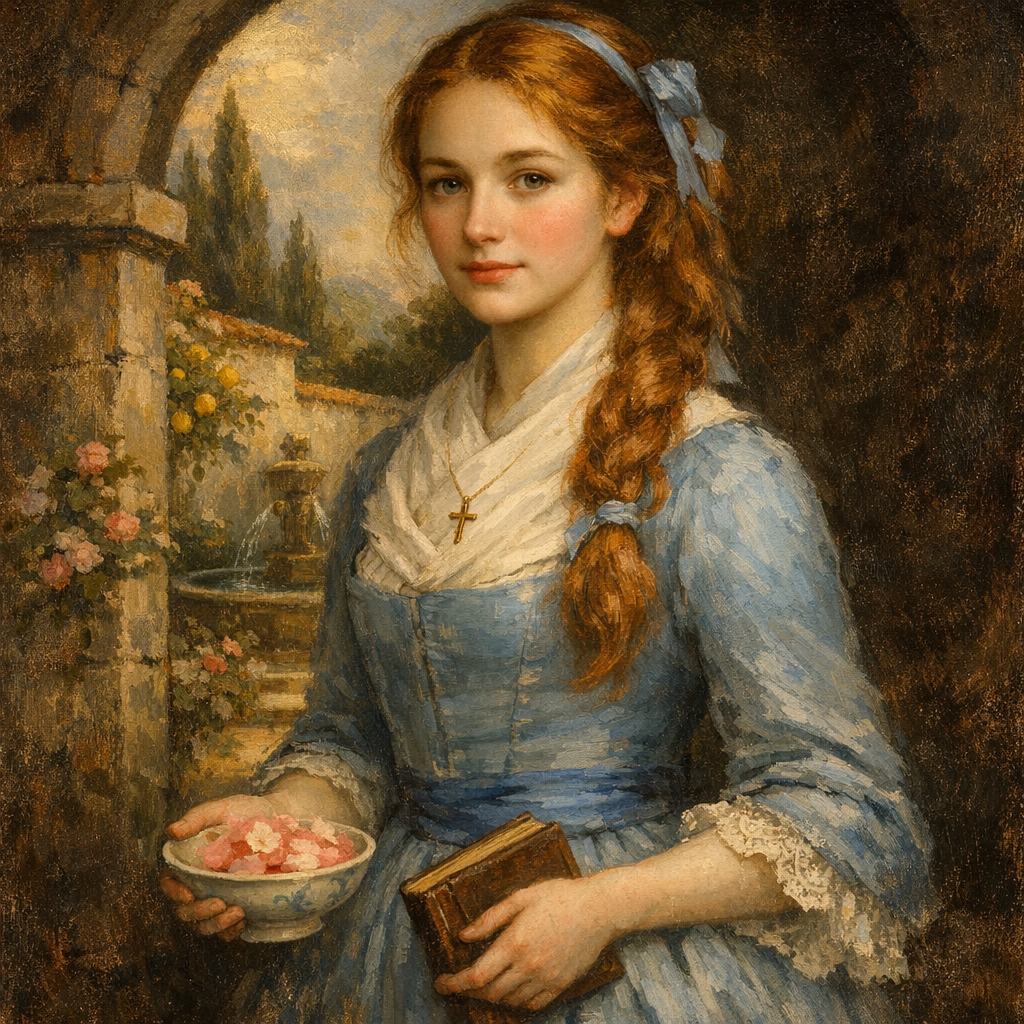
A character page and portrait for each of them creates a stable visual record. You don't have to reread the introduction of Baldini to remember who he is in chapter twenty-two. The portrait holds the face; the page holds the role and the stakes.
How Page Posse uses this
Every character and concept in a Page Posse guide has an AI-generated portrait. For fiction, these are built from the character's own description in the text — not from any adaptation or casting decision. For nonfiction, they're concept diagrams and symbolic representations. In both cases, the goal is the same: give the brain a second encoding channel it wouldn't otherwise have for prose-only content.
Chapter images serve a similar function for plot. A visual memory hook at the end of each chapter guide gives the brain a concrete scene to anchor the chapter's events to. You don't have to remember everything; you have to remember the image. The rest attaches to it.
This is old knowledge applied to a new problem. Books have always benefited from illustration — illuminated manuscripts, novel frontispieces, chapter headings. Page Posse is doing the same thing for adult reading clubs, built from each book's own source material.