
Chapter 10— Linda Randall
Linda Randall
TL;DR: Harry tracks Linda Randall to her apartment, finds a sharp, sardonic woman who liked Jennifer and is uneasy about her bosses, and gets a vague promise to "think about" calling him back — exactly the kind of half-cooperation the book will turn into a tragedy.
Spoilers through Chapter 10.
In one sentence
The chapter that hands Harry his last clean chance to save someone and lets you feel, only on a reread, that he is going to miss it.
What happens
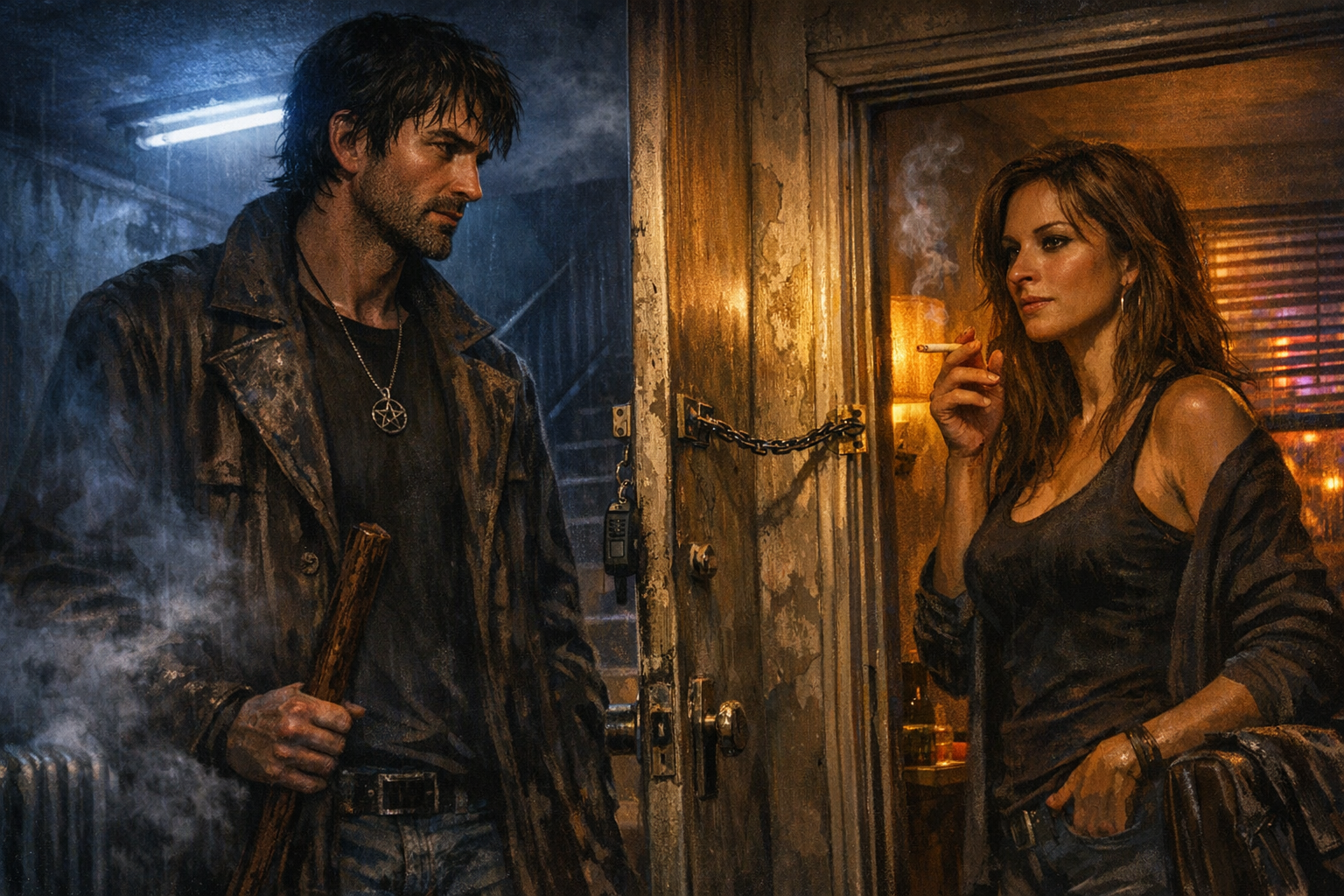
Harry calls. Linda Randall answers. He goes over to her apartment — a small place in a working-class block, neon-striped through the blinds — and finds her in a worn cardigan and dark trousers, a lit cigarette in her hand and a glass of bourbon at her elbow. They sit across from each other and the conversation is the most adult exchange in the book up to this point. Linda liked Jennifer. They were close. They were sometimes lovers. She does not pretend otherwise; she does not perform the disclosure either. She knows the Sells case is bigger than Jennifer and she is not going to be the woman who walks Harry into it tonight.
Harry pushes for names. She refuses, politely, with the dry humor of a woman who has dealt with persistent men in worse moods than Harry's. She agrees to "think about" calling him with what she can give. He leaves the apartment knowing she has more than she said and trusting, against his usual instincts, that she will come around. The chapter is short, quiet, and warm in the unhappy way good noir scenes are warm.
Key moments
- The cigarette. A character beat doing the work of a paragraph of description.
- The Town Car keys on the side table. A small visual the book will pay off later — Linda drives for the Beckitts, though Harry does not know what the Beckitts are yet.
- "Think about it." The exact phrase the book needs you to remember in chapter fifteen.
- No further intelligence delivered. Harry leaves with less than he hoped and more than he realizes.
Character shifts
Linda steps fully into the book — competent, tired, loyal to her own — and the novel introduces her as someone worth caring about so that the chapter-fifteen consequence lands the way it should. Harry's read of her is correct; his read of the timeline is not.
Why it matters
Linda is the only witness who could have given Harry the Beckitts' connection in time to do something about it. The chapter is structured to make her death later feel like the failure it is — Harry's, the book's institutions', and the killer's.
Themes to notice
- The witness who cannot afford to talk yet. A genre staple; the book honors it without irony.
- Loyalty to dead friends as a moral pressure. Linda is talking to Harry tonight because she liked Jennifer. Almost everyone Harry talks to in this novel is talking to him because of someone they loved.
For your book club
- Linda is on the page for less than ten minutes and is one of the book's clearest characters. Track exactly what Butcher gives her and ask which lines do the work.
- "Think about it" is the most consequential half-promise in the book. Why does Harry let her keep the promise that loose, and what could he have offered her that would have made her give him a name tonight?
- The chapter is shot, in prose terms, as a date — two people in a quiet apartment with cigarettes and bourbon and conversation. Why frame it that way? What does the book gain or risk by making the scene almost romantic?
Visual memory hook
A small apartment at night: bars of indigo-violet neon striping cigarette smoke, a single shaded amber lamp on a side table, a black Town Car key fob and a pager on the table, a glass of bourbon beading condensation, a woman in a worn cardigan with one bare shoulder watching the wizard across from her with a half-smile that is not unfriendly.
Next chapter, no spoilers
Harry needs a drink and a place no one will follow him into.