
Chapter 2— Two Hearts at the Madison
Two Hearts at the Madison
TL;DR: Harry rides up to the high-floor suite at the Madison Hotel and finds two bodies that no police forensic team can account for — Tommy Tomm and Jennifer Stanton, dead in bed, their hearts gone — and confirms within minutes that the cause of death is a magical working far more accomplished than the killer should plausibly be.
Spoilers through Chapter 2.
In one sentence
The book's first crime scene, played for procedural realism rather than horror, and the chapter that locks in what kind of novel you are reading.
What happens
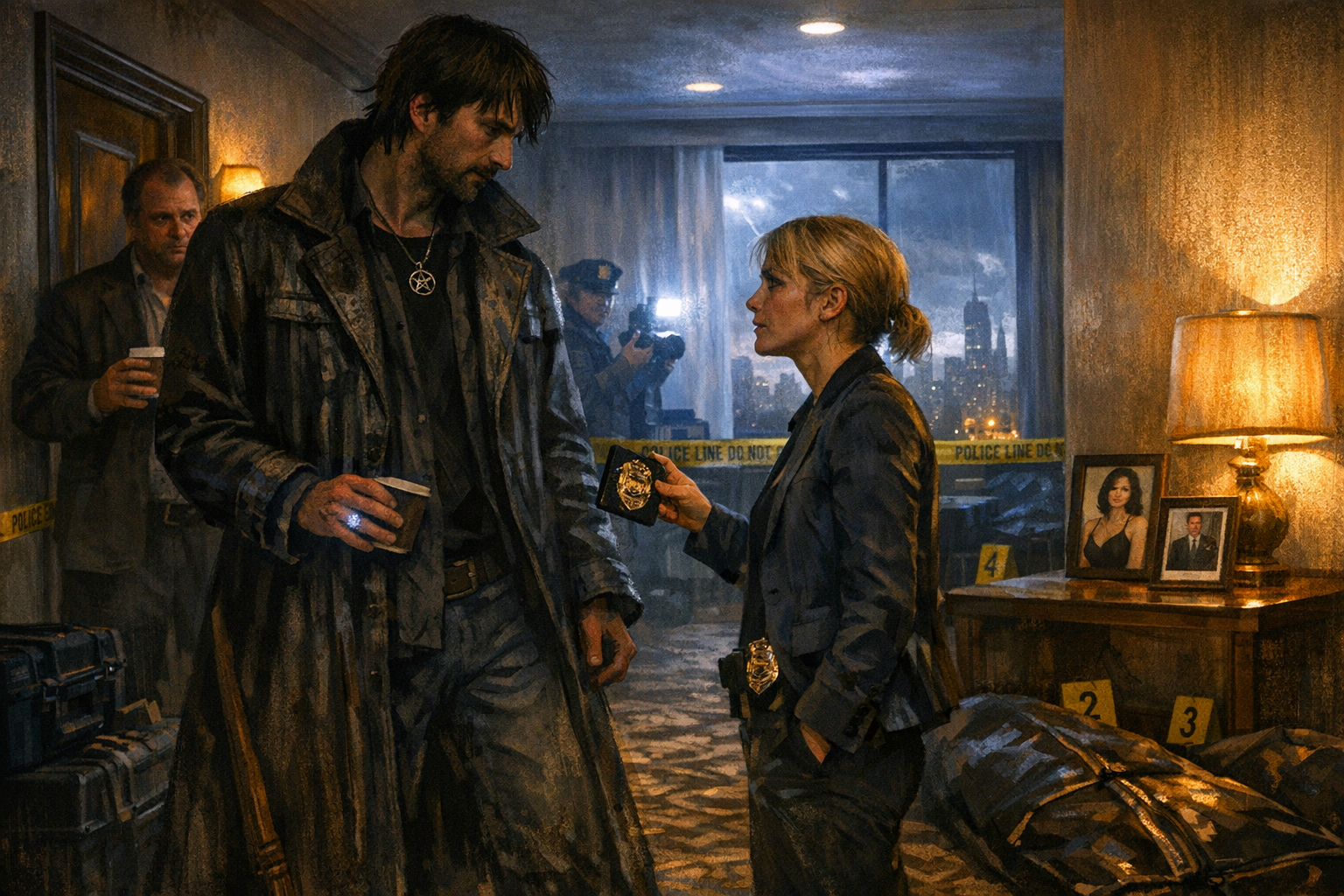
Murphy meets Harry in the lobby, walks him past the patrol officers, and rides the elevator up with him to the suite. Detective Carmichael is at the door, openly resentful that the wizard is here at all. Harry steps into the suite. Tommy Tomm and Jennifer Stanton are on the bed. Their chests have been opened from the inside; their hearts are not in the room. The blood is everywhere it should be. Nothing else in the scene is disturbed. There is no door damage, no signs of struggle, no defensive wounds. Harry takes in the scene slowly, using his Sight only briefly — long enough to confirm the lingering magical residue, not long enough to burn an image into permanent memory.
He gives Murphy a careful answer: yes, it's sorcery; no, he doesn't know who; he needs an hour to figure out how. Carmichael wants him out. Murphy lets him stay. Harry leaves the suite at the end of the chapter knowing he is now the most plausible suspect on a murder he didn't commit, and that the killer is at least as powerful a wizard as he is.
Key moments
- Carmichael at the door. The first time the book uses an institutional skeptic to push back on Harry's read. The pushback is professional, not personal, and the chapter respects it.
- The Sight, briefly. Wizards in this series can see magic by deliberately opening a sense most people don't have. Harry uses it for less than a minute and the book makes you feel the cost of the option.
- Murphy not telling Harry yet. She has rules about contaminating a witness, and she follows them. The two are working a case together without yet trusting each other with everything.
- What's missing in the room. The lack of evidence is the evidence. The book's procedural rules are wizard-procedural, not cop-procedural, and the chapter teaches you the rules by example.
Character shifts
Harry the wisecracking PI becomes Harry the operating professional in this chapter — the voice tightens, the jokes get shorter, the observations get specific. Murphy is established as the cop who will use him and watch him. Carmichael is set up for everything that follows.
Why it matters
This is the chapter that pivots the book from "wizard PI premise" to "wizard murder investigation." Once you have seen the bodies, the rest of the book is shaped by what kind of person could have done this and how Harry is going to prove it wasn't him.
Themes to notice
- The cost of using magical perception (the Sight). This chapter introduces it and the series will keep paying it off.
- The wedge between Harry and the cops who are not Murphy. Carmichael is the first edge of it; the chief upstairs will be the rest.
For your book club
- Butcher gives you the crime scene without lingering on the gore. Track the chapter's restraint and notice what it spends words on instead.
- The killer used a working keyed to sex magic with intimate partners. The book has decided you will know that by chapter six; this chapter, you only know that the bodies are in bed. What does the early withholding accomplish?
- Carmichael is correct that Harry should not be in this room. He is also wrong about why. How does the book hold both at once?
Visual memory hook
A high-floor hotel suite at the cold edge of dawn: beige patterned carpet, brass-numbered door, yellow police tape, evidence numbers on the floor, a panoramic window onto gray Chicago, a tall man in a soaked dark duster standing in the threshold while a small blonde cop holds open the door and a stocky detective in a charcoal blazer glares from behind her.
Next chapter, no spoilers
Harry has to translate what he just saw into a forensic model Murphy can use — and into one she is willing to believe.