
Chapter 27
The chapter in one sentence
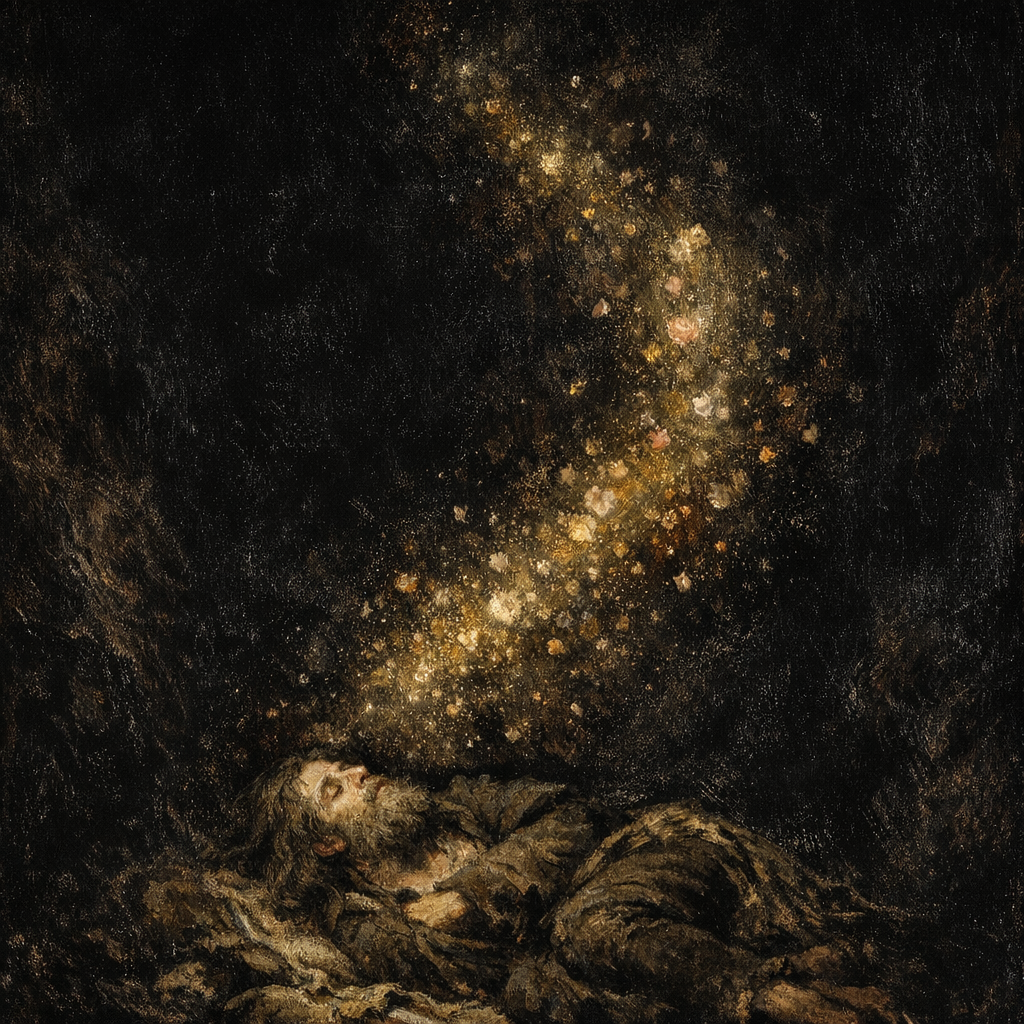
TL;DR: Grenouille seals himself in the pitch-black mountain cave for seven years, building from memory a glittering interior "scent palace" of every odor he has ever catalogued — the book's most beautiful and most uneasy demonstration of what Perfume's protagonist's interior life actually contains.
Spoilers through Chapter 27.
Süskind grants Grenouille seven years of pure interior life and renders them as the most luminous, and the most disquieting, set-piece in the novel.
What happens
Time compresses. Years of darkness, moss bed, scavenged scraps, a body slowly thinning to its bones. What replaces the world outside is an internal scent palace — a vast architecture in Grenouille's head built from every scent he has catalogued since infancy, organized into halls and galleries he can walk through at will.
Süskind takes the conceit seriously. The chapter walks the reader through the palace as if it were a real building, room by room: a Paris hall full of fish-market and tannery and bridge-canyon notes; a country hall of crushed thyme and cart-grease; a private chamber holding the recovered ghost of the plum girl. The prose is gorgeous. It is also deeply uncomfortable, because the palace is a museum of every scent Grenouille has ever wanted to keep, and several of those scents come from bodies.
The chapter ends with the palace at its most luminous — and the next chapter will demonstrate the catastrophe waiting inside it.
Key moments
- The palace's inner architecture. Halls, galleries, vaults. The chapter's rendering of a sensory imagination.
- The plum-girl chamber. A small private room holding the keystone memory. Süskind grants it the chapter's most haunting paragraph.
- The patience. Years that pass without the protagonist noticing them.
Character shifts
Grenouille becomes, briefly, the artist his project requires — without anyone to use, employ, or admire him. The chapter is the only chapter in Perfume in which his gift is not in service of any external transaction.
Why it matters
This is the book's argument that Grenouille's project is genuinely interior — that the murders, the perfume, the scaffold, the bone-yard, are all consequences of an aesthetic life that exists, with terrifying completeness, in his own head. It is also the book's most hopeful chapter, in that it shows him capable of reverie, until the next chapter takes the floor away.
Themes to notice
- Identity as something you have to make for yourself — and the most extreme staging of that project: a self entirely hand-built from remembered scents.
- The artist as monster, the monster as artist — the artist alone, with no victims, no buyers, no audience. The book grants this its most luminous prose.
Book club questions
- The chapter is one of the most beautiful in the book. Did Süskind earn the beauty, given the protagonist?
- The plum-girl chamber sits inside the palace with no other human chamber yet beside it. What does it mean that Grenouille has one keystone room and not many?
- Is the seven-year hermitage saving Grenouille, or destroying him?
Visual memory hook
A near-pitch-black volcanic chamber, a faint nebula of golden, rose, jasmine, citrus, and amber particles arcing up and out from a small gaunt figure curled on a moss bed — the imagined scent palace given visible form.
What's next
Chapter 28 punctures the palace.