
Chapter 7
The chapter in one sentence
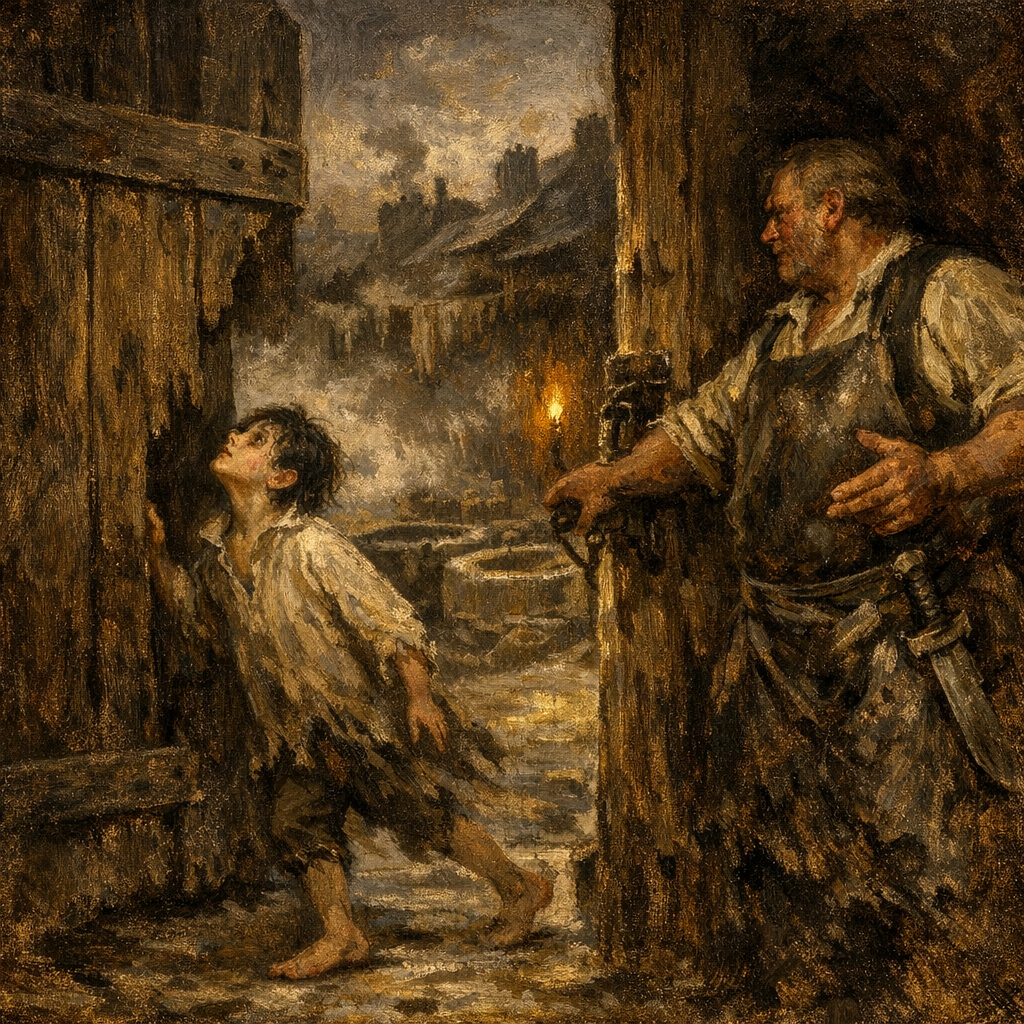
TL;DR: As Grenouille grows older and demonstrably indispensable, Grimal grants him a few hours of evening freedom each week, and the boy uses them for the only project he cares about — vanishing into Paris alone after dark to hunt and map its smells.
Spoilers through Chapter 7.
The narrator gives Grenouille's nightly habit a permission slip and an alibi, and the prose treats both as bureaucratic while the implications are not bureaucratic at all.
What happens
Grimal — by now treating his durable little asset as something worth preserving — grants Grenouille a few evening hours off, the way a man with a horse he's grown fond of will let it out to graze. The boy slips out of the tannery gate at dusk. The chapter follows the unbolting of the gate, the bruised sky overhead, the steaming lime-vats Grenouille walks past, and then leaves him in the city the same way Grimal does: turn the boy loose, see if he comes back.
He does come back. Always, predictably, before dawn. He never causes trouble in the streets; he never spends the few coins he occasionally scavenges. The freedom is, from Grimal's perspective, a small contractual grant. From Grenouille's perspective, it is the entire substance of his life.
Key moments
- The unbolting. Grimal's florid hand on the gate-bolt. A small thing the chapter pauses on.
- The threshold. Grenouille slipping through the half-open gate, head already tilted up to the air, scenting the city before his feet have finished crossing.
- The compact. Master and apprentice each understand the arrangement perfectly; neither says a word about what's actually being purchased.
Character shifts
Grimal completes his domestication into a man with a routine. Grenouille acquires the infrastructure he will need to commit his first murder. The infrastructure is approved.
Why it matters
The chapter is the book's first quiet moral test of the reader. Grenouille is not yet a killer; the freedoms Grimal grants are not yet visibly dangerous. The reader has been told nothing alarming. And yet the prose, which has been clinical and precise about every previous custodial arrangement, here begins to sound mildly sympathetic — as if a boy stepping past a tannery gate at dusk were a small natural thing rather than a structural disaster waiting to happen. The reader who is paying attention will notice the shift in register and ask whose side the narrator is on.
Themes to notice
- Identity as something you have to make for yourself — the freedoms Grenouille gets are the ones he uses for the project of himself.
- Pre-Revolutionary France as a body that knows it's rotting — the city outside the gate is a structure with no oversight on a boy with no oversight either.
Book club questions
- Grimal's permission is granted casually. Is the casualness a comment on Grimal, on the city, or on both?
- The narrator's tone modulates here. Where, exactly, does the prose start to lean toward Grenouille — and why might Süskind have chosen this point?
Visual memory hook
A small thin scarred boy slipping through a half-open tannery gate at dusk, the steam of lime-vats behind him, his head already up, scenting before he's stepped through.
What's next
Chapter 8 collapses everything the previous two chapters have set up — the city map, the freedom — into the night Grenouille tracks a single perfect scent across half the city to the back of a courtyard and meets the plum girl.