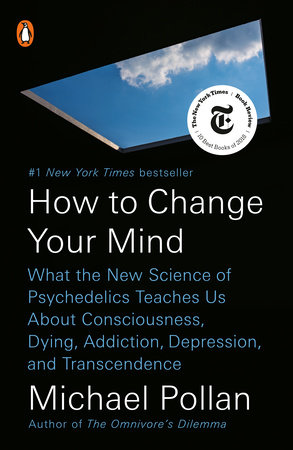
How to Change Your Mind
Michael Pollan
What the New Science of Psychedelics Teaches Us About Consciousness, Dying, Addiction, Depression, and Transcendence
Browse chapters below. Sign in anytime to save your reading progress.
Chapters
Save progress and unlock more with a free account
Resume links, your reading list, reactions, and progress-earned unlocks all show up once you sign in.
Dive deeper into the book
Themes stay spoiler-safe until the end
Create a free account to save progress so themes can unlock right when you finish the book.
About this book
TL;DR: Michael Pollan — the food writer who taught a generation to eat differently — turns his investigative lens on psychedelics, and comes back with something much bigger than a drug story: a rethinking of consciousness, the self, and what the mind is actually for.
Spoiler-light overview. The science is the story; no personal-experience details beyond what's needed to frame the book.
What this book is about
In 2018, Michael Pollan published a book that surprised his readers — and maybe himself. He was not, by his own admission, the obvious candidate to investigate psychedelics. He was a middle-aged, bourgeois journalist best known for writing about food. He had no countercultural history, no spiritual seeking, no particular interest in altered states.
Then a few things happened. A New York Times article about psilocybin treating cancer patients' anxiety. A conversation with a psychologist who described LSD as the most important intellectual experience of his life. A study showing that psilocybin reliably occasions "mystical-type experiences" — and that those experiences persist, measurably, for years. Pollan's curiosity caught. He went investigating.
How to Change Your Mind is what he found. It is part history (the remarkable 1950s-60s research renaissance, its politically-engineered destruction, its quiet modern revival), part neuroscience (what psychedelics actually do to the brain, and what that reveals about consciousness), and part memoir (three guided psychedelic journeys Pollan undertook himself, underground, in middle age). He weaves these three threads into a single argument: that psychedelics, used with intention and care, illuminate something important about the nature of the mind — and that this knowledge, suppressed for fifty years, is now urgently needed.
The book became a #1 New York Times bestseller and helped catalyze mainstream attention on what researchers now call the psychedelic therapy renaissance.
Why readers gather around this book
This is a rare book that genuinely changes how you think about something foundational — in this case, your own mind. The science is accessible, the history is gripping, and Pollan's personal honesty about his own transformation makes the whole thing land with unusual force.
It's also a book that generates immediate, opinionated conversation. Almost everyone has a prior position on psychedelics (from deep skepticism to personal experience), and the book challenges every position with equal rigor. The discussion almost runs itself.
What to know before reading
Pacing: The book alternates between long historical/scientific chapters and more personal memoir sections. The history chapters (especially Chapter 3, on the first wave) are dense but rewarding; the travelogue chapter (Chapter 4) is the memoir heart and where the book becomes most viscerally engaging.
Vibe: Intellectual and warm simultaneously. Pollan writes with the same curiosity he brings to food — he is interested, not converted; reporting, not preaching. The book is genuinely open to uncertainty in a way that feels rare.
Content notes: Detailed descriptions of psychedelic experiences (including ego dissolution). Discussions of depression, cancer, end-of-life anxiety, and addiction. No graphic content; all clinical or personal-reflective in register.
Non-fiction note: This is not a how-to guide, and Pollan is careful to say so. The underground sessions he describes were conducted with trained guides; he is not endorsing recreational use.
Main concepts and people
Michael Pollan — Your narrator and guide. A skeptical journalist who becomes, reluctantly and then wholly, a convert to the idea that these substances deserve serious attention.
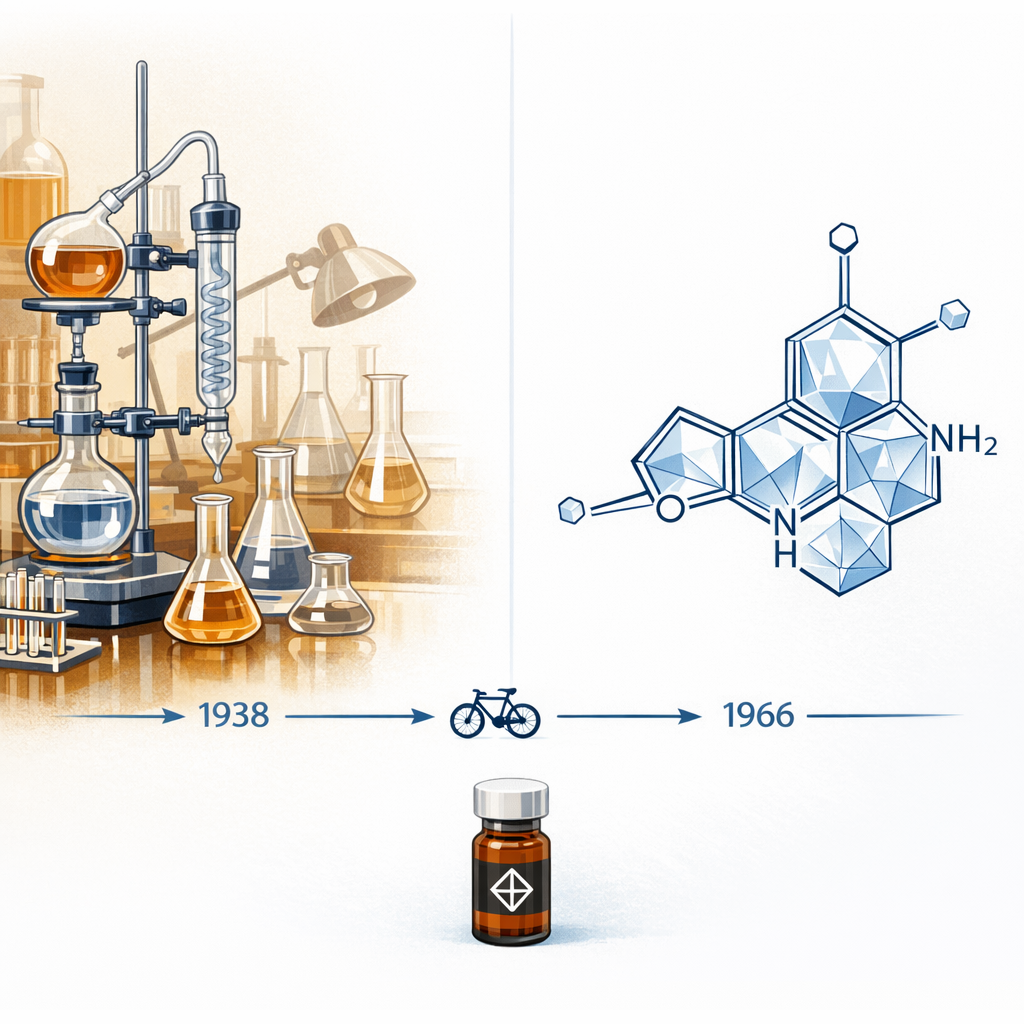
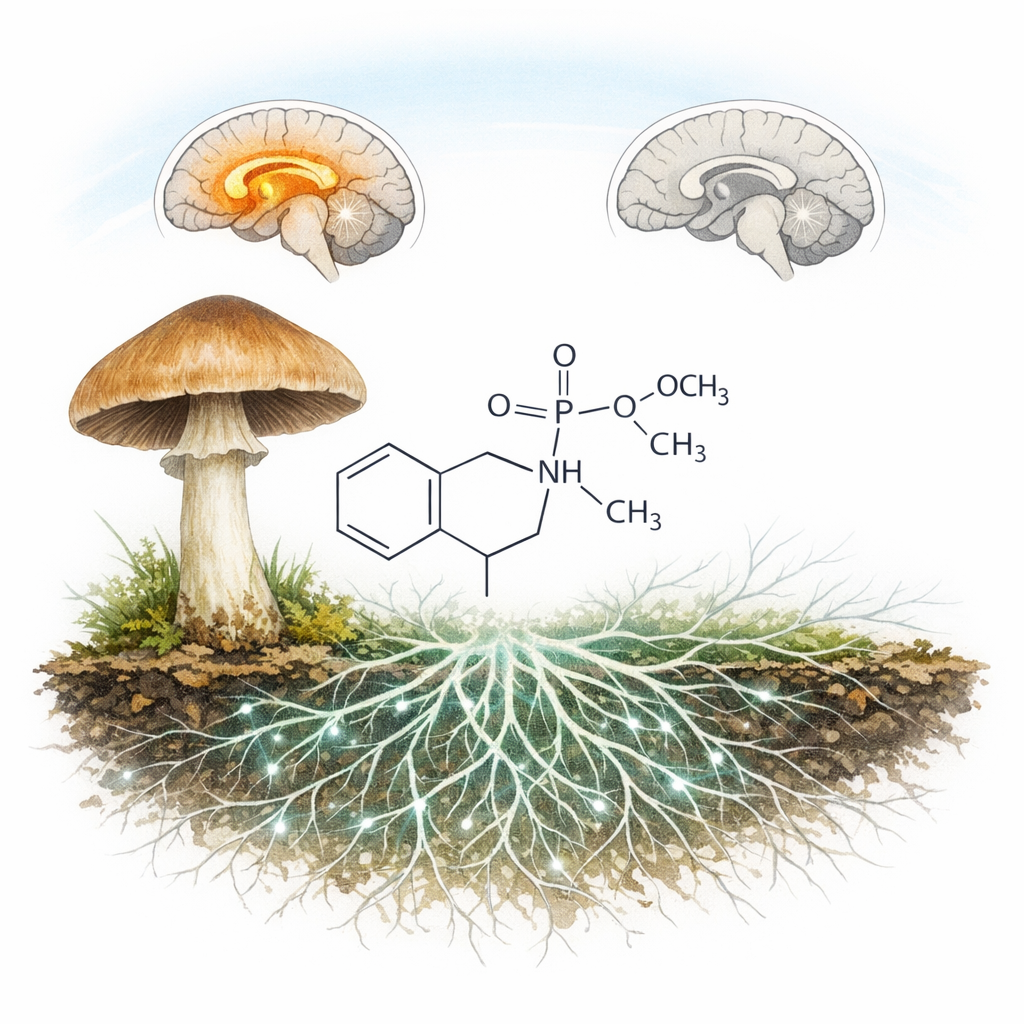
Psilocybin — The molecule at the book's center. Found in ~200 mushroom species; the focus of the modern research renaissance. Pollan takes it twice.
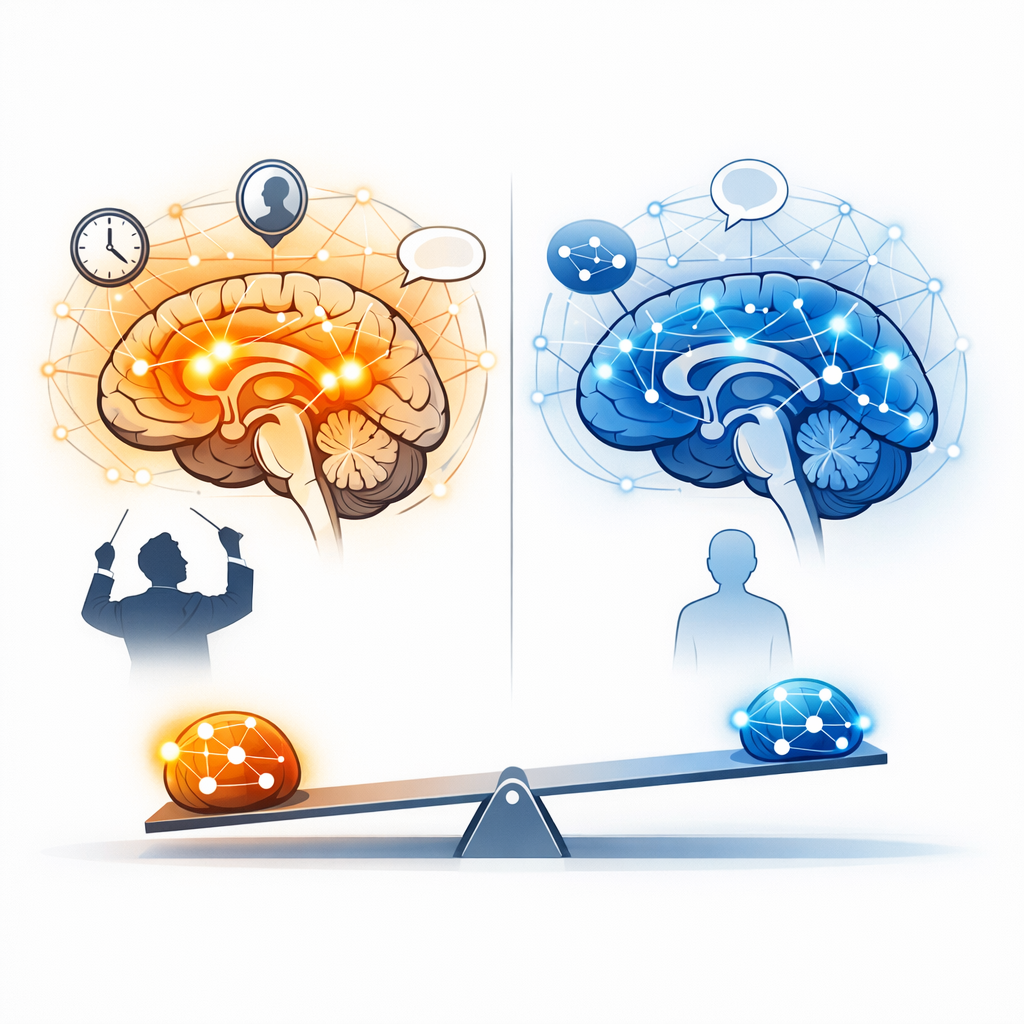
The Default Mode Network (DMN) — The brain's ego machine: the neural hub that generates self-referential thought, rumination, and the narrative "I." Psychedelics work, in part, by quieting it.
Ego Dissolution — The experience of the self temporarily ceasing. The book's central therapeutic mechanism — and its most unsettling and liberating concept.
Roland Griffiths — The Johns Hopkins researcher whose landmark 2006 study restarted legitimate psychedelic science.
Al Hubbard — The enigmatic millionaire who introduced 6,000 people to LSD in the 1950s and 60s — and whose work Stewart Brand built the Whole Earth Catalog from.
Robin Carhart-Harris — The Imperial College neuroscientist whose Entropic Brain Theory gives the whole book its neurological backbone.
How the book is shaped
| Chapter | What it covers |
|---|---|
| Prologue — A New Door | Three events that made Pollan investigate |
| Chapter 1 — A Renaissance | The modern research revival; Roland Griffiths and Hopkins |
| Chapter 2 — Natural History: Bemushroomed | Mushrooms, mycology, Pollan's first experience |
| Chapter 3 — History: The First Wave | The 1950s–60s research era; Al Hubbard; Timothy Leary; the shutdown |
| Chapter 4 — Travelogue: Journeying Underground | Pollan's three guided trips (LSD, psilocybin, 5-MeO-DMT) |
| Chapter 5 — The Neuroscience | The Default Mode Network; the Entropic Brain Theory |
| Chapter 6 — The Trip Treatment | Therapeutic applications: dying, addiction, depression |
| Epilogue — In Praise of Neural Diversity | The future; Pollan's lasting transformation |
Major themes
- The manufactured self — How much of "you" is a fixed truth, and how much is a useful story?
- Science and the sacred — Can a molecule produce a genuinely spiritual experience? What does it mean if it can?
- The politics of consciousness — How the war on drugs suppressed a generation of medical science.
- Controlled chaos — Why the brain sometimes needs more entropy, not less.
Best discussion angles
- Pollan is a skeptic who is transformed by the experience. How does his position as an "outsider" journalist shape the book's credibility — and its blind spots?
- The book argues that the mystical experience is the therapeutic mechanism. Does it matter whether the metaphysical claims are true, if the effect is real?
- Timothy Leary destroyed a generation of legitimate research with his recklessness. Are there echoes of that risk in today's psychedelic revival?
- The Default Mode Network generates the "I." If ego dissolution is therapeutic, what does that say about how we normally live?
- The book ends cautiously optimistic. Has that optimism proven justified since 2018?