
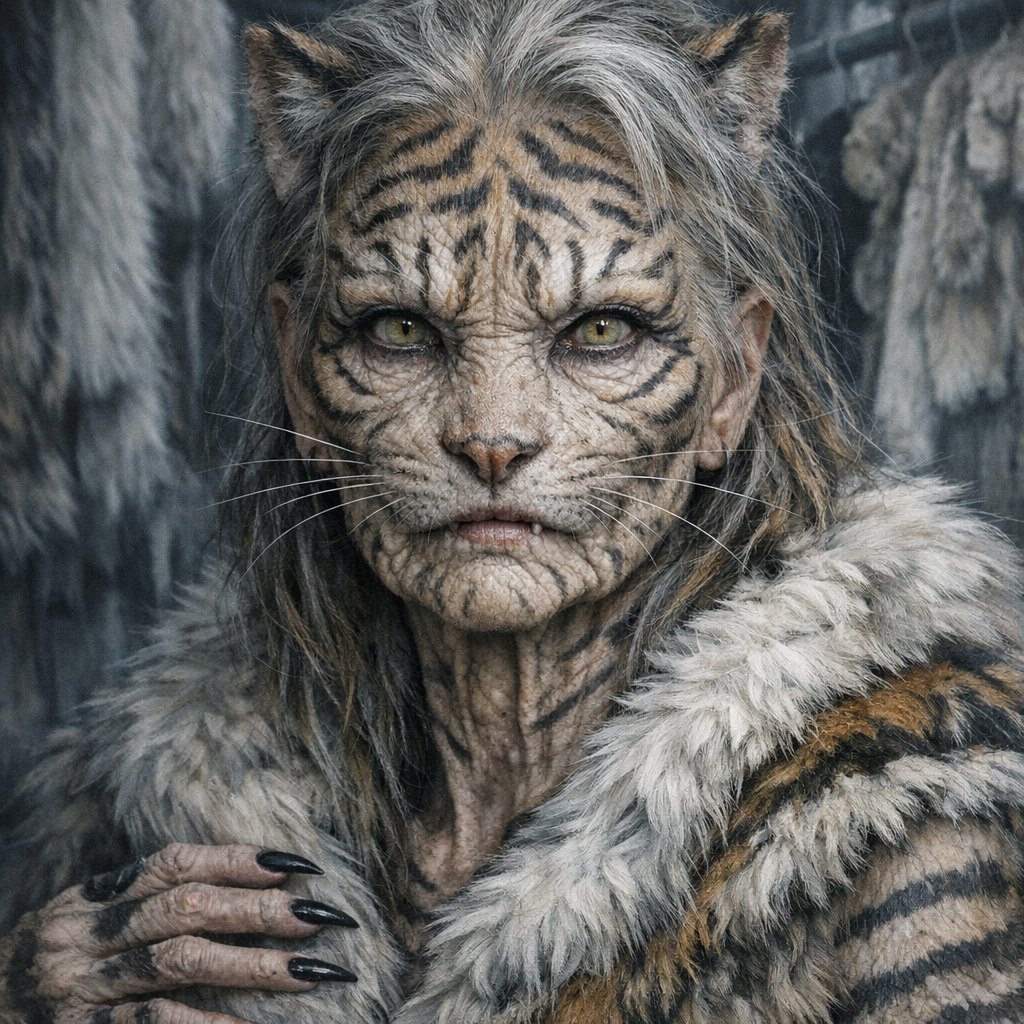
Tigris
Spoiler-light.
Snapshot: A former Hunger Games stylist, discarded by the Capitol and surgically remade to look like a tiger — who shelters Katniss's squad in the war's final act.
Role in the story
Tigris appears late in Mockingjay but at a crucial moment. Hunted and presumed dead, the survivors of Katniss's squad need somewhere to disappear in the Capitol, and Cressida leads them to Tigris's fur-goods shop. A quiet enemy of President Snow, Tigris hides the fugitives in the cellar beneath her shop — a small act of shelter that keeps the mission alive.
Personality
Watchful, terse, and hard, Tigris is a survivor who was used and thrown away by the Capitol she once served. She speaks little, but her loyalty, once given, is fierce, and her hatred of Snow is total and cold. There is something both pitiable and dangerous about her.
What they want
To strike back, in her own small way, at the Capitol that discarded her — and at Snow specifically — by sheltering the people working to bring him down.
What they fear or hide
Her whole appearance is the visible record of what the Capitol's approval once meant to her. What she hides now is simple caution — the wariness of someone with every reason not to be caught helping fugitives.
Key relationships
- Cressida — The crew member who knows Tigris and brings the squad to her door.
- President Snow — The man who discarded her, and the target of her cold, patient hatred.
How to recognize them on the page
An elderly woman remade, over years of cosmetic surgery, to resemble a tiger: a face surgically flattened into a feline shape, whiskers implanted into her cheeks, skin striped like a tiger's pelt, and pale gold eyes. She runs a fur-goods shop and dresses from her own stock.
Aliases
The following names and references in the book all point to this character. Use any of these as link anchors back to this page.
- Tigris (canonical — the most common form)
Discussion questions
- Tigris altered herself for the Capitol's approval and was discarded anyway. What does she add to the book's portrait of the Capitol?
- She is grotesque by design and sympathetic by circumstance. How does the book hold both?
- Her shelter is a small act in a huge war. Why does the book give such a minor character such a pivotal moment?